
Massillon, OH · Garage Door Service
Deciding Whether to Fix or Replace an Older Door in Massillon
A look at when a Massillon garage door built in the 1960s or 70s is worth repairing versus replacing, based on this area's housing age and cold winters.
- Repairs & new doors
- Springs & openers
- Serving 5 nearby communities
What Is Going On
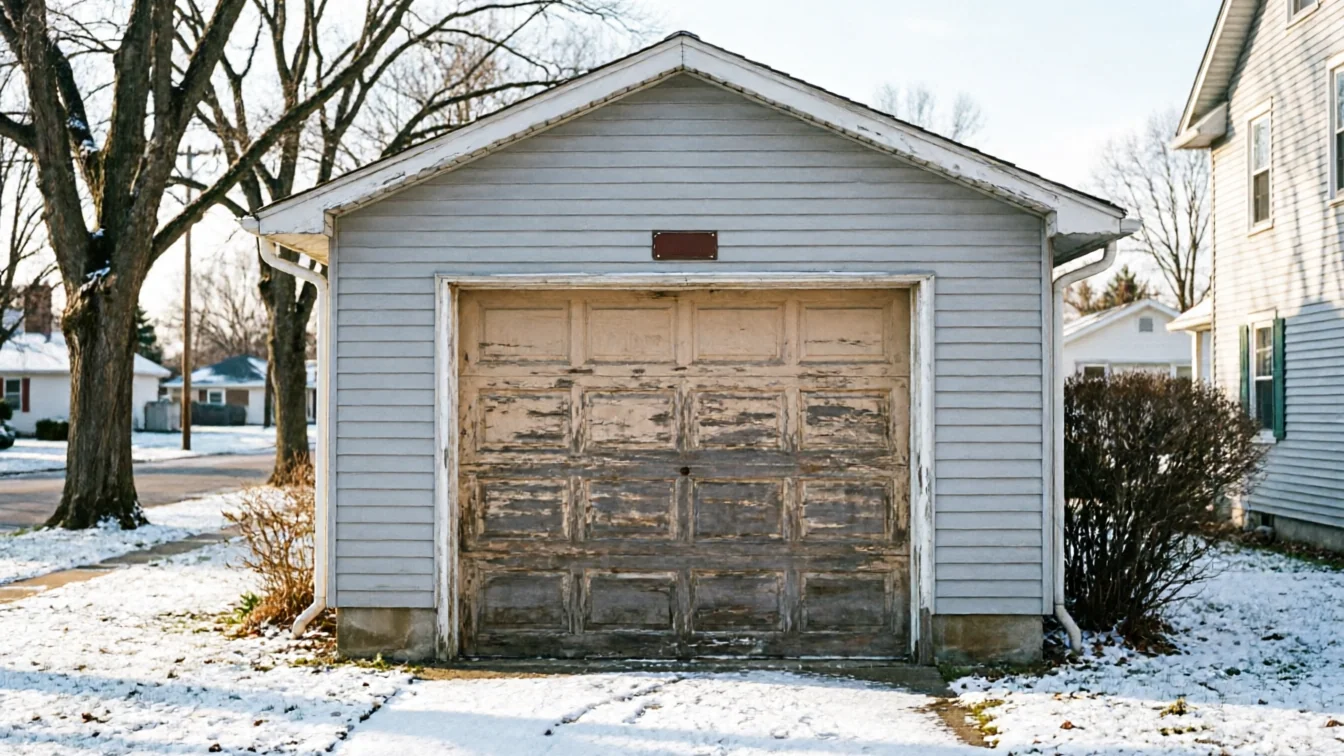
Most houses on this side of Massillon went up between 1938 and 1994, with the median sitting around 1964, so a lot of the doors still turning are original equipment from the Johnson-era boom. That's not a guess about your particular house, it's just what the housing stock here tells us before we even see the door. A door that old was built to a different standard than anything sold now. Panels were heavier, steel gauges thinner, and hardware was sized for springs and openers that weighed less than today's units.
Across the 31 named areas we cover, from Perry Heights three miles out to Mogadore twenty miles south, the housing stock leans hard into 1960s and 70s construction, which means the same generation of torsion hardware shows up on every other call. That consistency is actually useful. It means we're not guessing at what's behind the trim when we pull up - we've seen the same end bearing plates, the same two-piece track brackets, more times than we can count. Worth fixing or not usually comes down to whether the track and frame are still square, not whether the door looks tired on the outside.
What the Weather Here Does to It
Massillon sits in a severe cold climate band, where freeze-thaw cycles work steel springs and track bolts loose every winter. That's not cosmetic wear. A torsion spring that's been through thirty or forty winters of contraction and expansion has metal fatigue you can't see from the garage floor, and it tends to let go without much warning.
Cold also stiffens the nylon rollers and the lift cable sheathing that a lot of these older doors still run. On a 1960s door with steel rollers that were never upgraded, winter is when the bearings seize and the door starts dragging on one side. We see this pattern enough in this climate that it's one of the first things we check on any door built before the 80s - not because the door is bad, but because cold is hard on parts that were never rated for forty or fifty years of service in the first place.
What Changes With the Season
With 45,805 owner-occupied houses among 81,050 households in the service area, a big share of the doors we see are the same vintage, which is why the same three failure points keep showing up: spring wear, track misalignment, and brittle weatherstripping. Winter calls skew toward springs that finally snap and openers straining against frozen lubricant. By late spring, it's more often tracks that have drifted out of alignment from a winter of uneven contraction, plus panels that show hairline cracks where cold made the steel brittle for a season.
If your house falls in that 1964-ish median range, the door has likely been through fifty or sixty of these seasonal swings already. Each one adds a little stress to hardware that was fine when it was new but wasn't designed with this region's cold in mind. That's the real question behind fix-or-replace: not how the door looks, but how many more freeze-thaw cycles the springs and track brackets have left in them.
What It Costs
We don't have a flat number to quote here, and we'd rather tell you that than make one up. What we can say is how the decision usually breaks down. At a median household income of $70,132, most owners here are weighing a $300 spring job against a four-figure replacement, not treating either as pocket change. That math changes the calculation - a repair that buys five more years on an otherwise sound door is often the right call, even if a brand-new door would look better.
Where repair stops making sense is when the frame itself has racked out of square or the track brackets have pulled loose from rotted jamb wood, which does happen on houses from the 1938-1994 range we cover. At that point you're not fixing a door, you're rebuilding the opening, and that's a different job. We'll tell you straight if that's what we're looking at rather than patching something that'll fail again in a season.
Frequently asked questions
Is it worth fixing a garage door from the 1960s or 70s?
Usually yes, if the track and frame are still square. Most failures on doors this age are springs, rollers, or cables - parts that get replaced, not the door itself. We only recommend replacement when the frame has racked or the panels are cracked through from cold fatigue, which does happen on houses in this area's older housing stock.
Why do old doors fail more in winter here?
Massillon's severe cold band puts steel springs and track hardware through repeated freeze-thaw cycles every year. On a door that's fifty or sixty years old, that's a lot of expansion and contraction on metal that's already fatigued, which is why winter is when springs finally let go.
How do I know if my door is original to the house?
If your house was built between 1938 and 1994, which covers most of this area, check the end bearing plates and track brackets - older two-piece brackets and steel rollers are a strong sign the door hasn't been swapped. We can confirm it on site without guessing.
Do you ever recommend against repairing?
Yes. If the frame has racked out of square or the jamb wood behind the track brackets has rotted, a repair won't hold. That's a rebuild, not a patch, and we'll say so instead of charging for a fix that fails again next winter.
Related garage door services in Massillon
More garage door guides
Book garage door service in Massillon
Call now or request a quote - tell us what the door is doing and where you are.