
Massillon, OH · Garage Door Service
What Actually Happens During a Massillon Service Call
A real look at what a Massillon garage door service call checks, tied to this area's 1960s housing stock and cold-climate wear on springs, tracks, and openers.
- Repairs & new doors
- Springs & openers
- Serving 5 nearby communities
What Is Going On
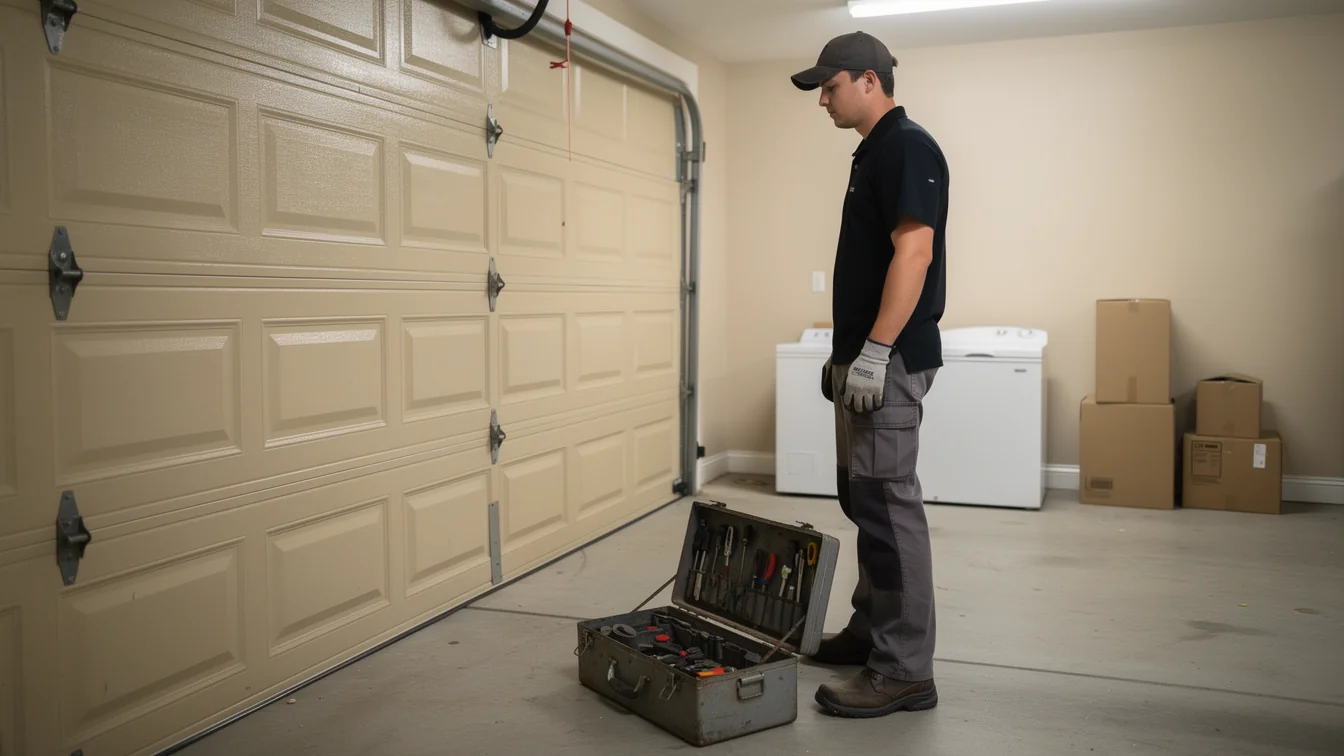
Most of the houses we get called to around Massillon went up between 1938 and 1994, with the bulk of that stock built in the 1960s and 70s. That matters because a door built to those specs is now 50 to 60 years into its working life, and the hardware on it was never meant to last forever. A service call on one of these houses usually starts the same way: we open the panel, check the springs for the stretch and sag you get after decades of cycles, and look at the track for the kind of bend that comes from an opener dragging a door that doesn't balance right anymore.
We're not diagnosing a mystery. We're confirming what age and use have already done. On a door this old, the rollers are usually the original steel ones, the cable has frayed strands nobody's replaced, and the opener - if it's been swapped at some point - often doesn't match the spring tension the door actually needs. A service call tells you which of those things is the one actually causing your problem, instead of guessing and replacing parts that were fine.
What the Weather Here Does to It
Massillon sits in a severe cold climate band, and that shows up in specific ways on a service call. Steel contracts in hard cold, and a torsion spring that's already fatigued from 50-plus years of cycling is more likely to snap on a January morning than a July afternoon. We see more broken springs and sheared cables in the cold months than any other time, and it's not coincidence - it's metal fatigue meeting temperature swing.
Cold also stiffens the lubricant on tracks and hinges, so a door that seemed fine in September starts groaning or sticking by December. On a service call, we check whether that resistance is lubrication or something mechanical - bent track, a roller that's worn flat on one side, a hinge pin working loose. The honest limitation here: we can't stop steel from behaving like steel in the cold. What we can do is catch the wear before it becomes a 6am call with the door stuck halfway down and a car that needs to be at work.
What Changes With the Season
Spring and fall are when we see the most service calls that turn into real findings, not because the weather breaks things outright but because temperature swings expose what winter already weakened. A spring that survived a cold snap but is visibly stretched will usually show symptoms once the weather warms and the door's being used more - more trips in and out, more cycles on a part that's past its margin.
Summer heat is a smaller factor here than the cold is, but it does loosen stuck bolts and hardware that corrosion or cold seized shut over winter, so we sometimes get doors in during a service call that work loose on their own once the weather turns. The service call in any season does the same core check - balance, cable condition, track alignment, opener force settings - but what we expect to find shifts. Winter calls skew toward broken springs and frozen tracks. Spring and fall calls skew toward things that were already failing slowly and finally gave out.
What It Costs
We don't have a flat number to quote here, because what a service call actually covers depends on what's wrong, and on a house with original hardware from the 1960s or 70s that can mean anything from a lubrication and balance check to a full spring and cable replacement. What we can tell you is what drives the range: whether the opener matches the door's weight, whether the track needs realignment or replacement, and whether the springs are original or already a prior repair.
One honest limitation: if your door and opener are both original equipment from that era, parts aren't always sitting on a shelf, and a straightforward repair can turn into a wait on a part. In some of those cases, especially on a door that's been patched more than once, replacing the whole unit costs less in the long run than chasing one more repair on 60-year-old hardware. We'll tell you straight which category your door falls into once we've looked at it, not before.
Frequently asked questions
How old is a typical garage door in the Massillon area and does that matter for a service call?
Housing in this area was mostly built between 1938 and 1994, with a lot of it dating to the 1960s and 70s. A door that old is likely on original or once-replaced hardware, which means a service call is as much about assessing remaining life as fixing the immediate symptom.
Why do springs break more in winter around here?
This area sits in a severe cold climate band, and cold steel is more brittle under tension than warm steel. A torsion spring that's already fatigued from decades of cycling is far more likely to fail on a cold morning than during a mild month.
Do you serve areas outside Massillon itself?
We work throughout the surrounding area, including communities like Perry Heights, Canal Fulton, Dalton, and other towns within roughly 20 miles of Massillon.
Can a service call tell me if I need a new door instead of a repair?
Yes. On older hardware - especially original equipment from the 1960s or 70s - a service call includes checking whether the springs, track, and opener are worth repairing individually or whether the combined wear means replacement is the better long-term move.
Related garage door services in Massillon
More garage door guides
Book garage door service in Massillon
Call now or request a quote - tell us what the door is doing and where you are.