
Massillon, OH · Garage Door Service
Why Your Massillon Garage Door Lets the Cold In
Massillon homes built mostly 1960s-70s lose heat through worn garage door seals every winter. Here's what the cold does to those doors and what it costs to fix it.
- Repairs & new doors
- Springs & openers
- Serving 5 nearby communities
What Is Going On
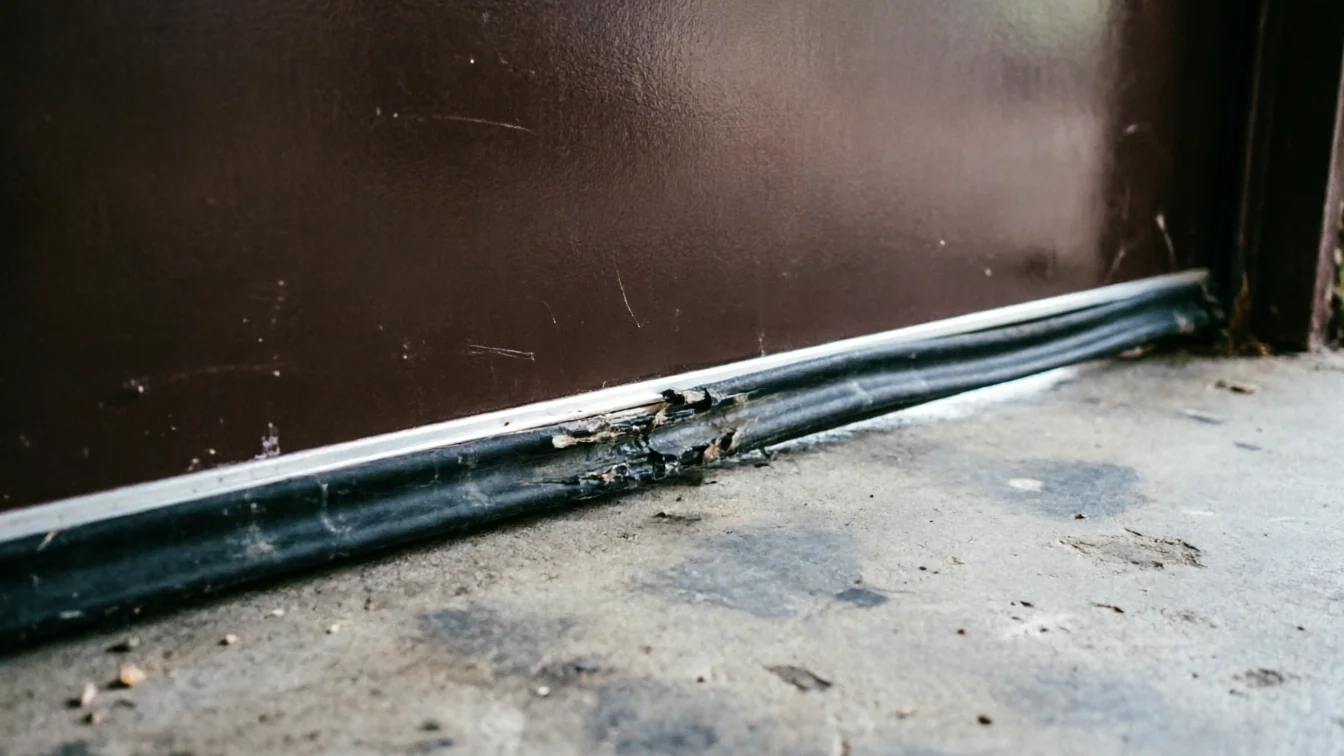
Walk into most garages across Massillon and the draft comes from the same three spots: the bottom seal, the side jambs, and the gap where two panels meet. Housing stock here mostly went up between 1938 and 1994, with a median build year of 1964, and that matters because the door and track hardware installed back then wasn't built with the vinyl bottom astragal or flexible side seals that newer doors use. A lot of these original setups have been patched over the decades, not replaced, so the rubber that's supposed to seal the slab to the floor is often older than the homeowner realizes. Once that rubber cracks or flattens, you get a visible gap you can see daylight through, and in a lot of the 1960s-70s era houses across this area, that gap has been there long enough that nobody notices it anymore until a cold snap makes the garage feel like the outdoors. This isn't a dramatic failure. It's slow. The door still goes up and down fine, which is exactly why people don't think to fix it until the heating bill or the frozen garbage can in the corner makes it obvious.
What the Weather Here Does to It
This area sits in a cold-severe climate band, and that changes what a bad seal actually costs you. It isn't just a draft - it's moisture. Cold air meeting a warmer garage interior condenses on metal track and hardware, and on the older torsion and extension spring setups common in houses built before the 1970s, that moisture sits on exposed coils and brackets instead of drying off. Over a winter or two that turns into surface rust on springs and hinges, which changes how they flex and shortens their life. A gapped bottom seal also lets snow and slush blow in during wind-driven storms, and that meltwater pools right where the door track meets the slab - the same spot where panel rust usually starts. None of this happens fast. It's cumulative, season over season, and it's worse on older doors that were never upgraded with a thicker bottom seal designed for this kind of cold.
What Changes With the Season
In fall, the fix is simple and cheap: check the bottom seal for flattening or cracking before the first hard freeze, because once the rubber is frozen stiff, it won't seat right no matter how much you crank the door down. In the depth of winter, the biggest issue is seal rubber that's gone rigid in the cold - it stops flexing against the slab and just sits there letting air through, even if it looked fine in October. Spring is when you find the damage: rust spots on springs, swollen wood jambs on older frame-and-door combos, or a bottom seal that tore loose from ice buildup. If your garage shares a wall with living space, which is common in this area's older ranch and split-level layouts, a bad seal in a cold-severe winter means that wall runs colder all season, not just during a storm.
What It Costs
We don't have a flat number to hand you here - seal and weatherstripping jobs vary enough with door size and condition that quoting a single price without seeing the door would be a guess, and a guess is worse than nothing. What we can tell you: a straightforward bottom seal or side seal replacement on an older single or double door is one of the cheaper calls we make, nowhere near the cost of a spring or opener repair. If the jambs themselves have swollen or rotted from years of moisture intrusion - more common on houses from the 1938-1994 stock that still have original wood framing - that's a bigger job, and we'll tell you honestly if a seal fix alone won't solve it. One limitation worth saying plainly: if your door is badly out of square from age or settling, a new seal won't seal it. That's a door or track problem, not a weatherstripping problem, and it's a different conversation.
Frequently asked questions
Why does my garage feel colder than it used to even though the door works fine?
The door opening and the seal doing its job are two different things. On older doors, common in houses from the 1960s-70s era around Massillon, the rubber bottom seal and side seals degrade years before the mechanism does. The door still operates fine while the seal underneath has already flattened or cracked, letting in cold air and, in a cold-severe climate like this one, condensation that leads to rust.
Should I replace the seal myself or call someone?
Bottom seals are a reasonable DIY swap if you can get the right track size for your slab - older doors sometimes used nonstandard channel widths. Side and top seals are trickier to seat evenly. If you're not sure which track your door uses, that's worth a call rather than guessing and buying the wrong part twice.
Will a new seal fix the cold spot in my attached garage wall?
It helps, but it's not the whole answer. In older homes here with a garage sharing a wall with living space, insulation in that shared wall matters as much as the door seal. A new seal stops the direct draft; it won't add insulation that was never there. We can tell you which problem you're actually dealing with on a look.
Related garage door services in Massillon
More garage door guides
Book garage door service in Massillon
Call now or request a quote - tell us what the door is doing and where you are.