
Massillon, OH · Garage Door Service
Why a Massillon Garage Door Jumps the Track
Massillon homes built mostly in the 1960s and 70s pair original brackets with decades of cold-season stress. Here's why doors jump track and what actually fixes it.
- Repairs & new doors
- Springs & openers
- Serving 5 nearby communities
What Is Going On
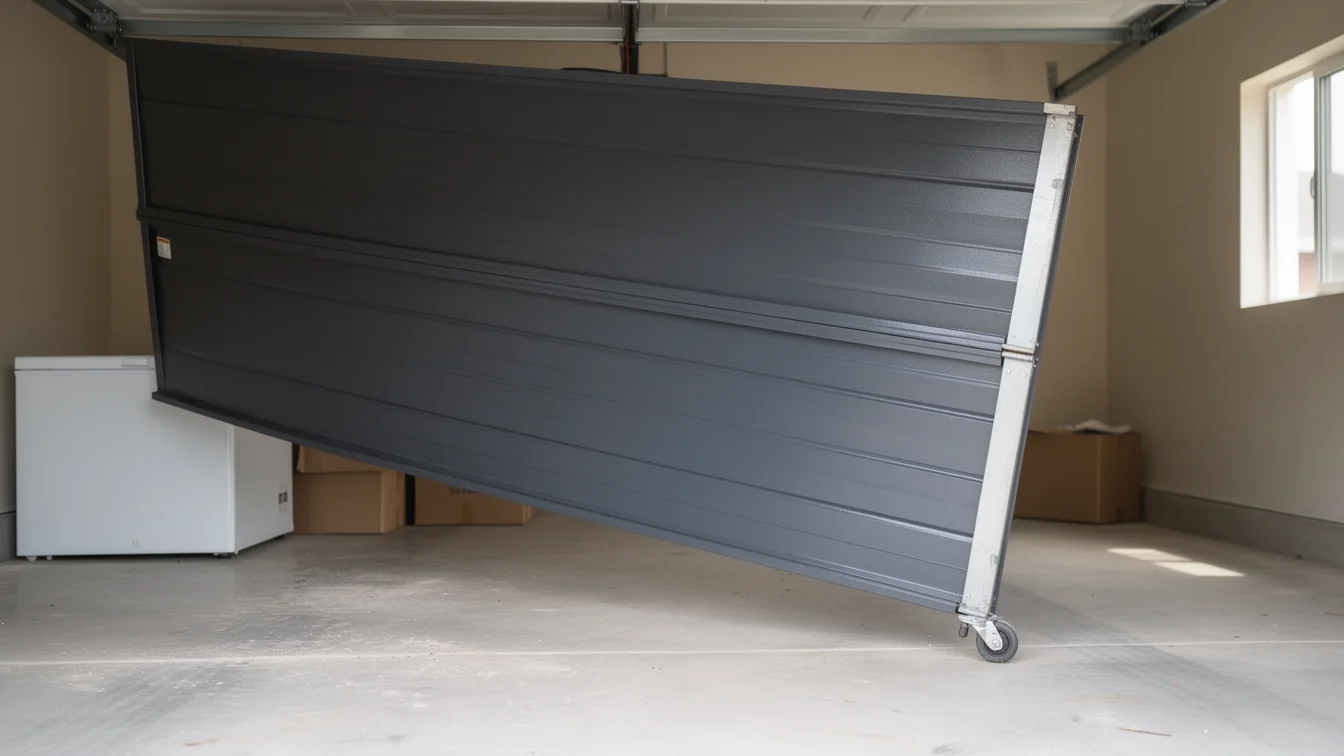
A door off track almost never happens on its own. It's a roller that's worn thin riding in a bracket it was never meant to outlast, or a track bolt that's backed out a quarter inch at a time until the door finally walks sideways on its way down. Most of the houses we work on in this area went up between 1938 and 1994, with the bulk of that stock dating to the 1960s and 70s. That's the median year, 1964, and it matters here because the steel track and stamped brackets from that era were built to a lighter spec than what goes in today. They've had sixty years of seasonal expansion and contraction to work bolts loose and wear roller channels unevenly.
The usual trigger is a bent track rail, a roller that's cracked or seized, or a bracket pulled away from the jamb because the screws finally gave up the wood they were driven into decades ago. On a door this old, one small misalignment compounds - a slightly bent section near the bottom roller throws the whole panel stack off as it travels up, and within a season the door is binding, scraping, or jumping the track outright.
What the Weather Here Does to It
Massillon sits in a cold, severe climate band, and that's not a minor detail for a door built on 1960s-era steel track. Cold contracts metal. Track rail that's a hair out of plumb in July can bind in January because the steel has pulled in just enough to pinch the rollers at the tightest point of the curve. Grease that moved fine in warm weather thickens and stops cushioning the roller-to-track contact, which means more friction, more wear, and eventually a roller that skips the rail instead of rolling through it.
Moisture is the other half of it. Freeze-thaw cycles work on anything metal-on-metal, and a track bracket that's already loose from age gets worse every time the temperature swings through freezing overnight and back up by afternoon. We see doors come off track most in the stretch where that swing happens daily, not during the deep cold itself - the deep cold just locks a problem in place that the freeze-thaw cycle already created.
What Changes With the Season
The failure pattern shifts through the year on houses this age. Late fall into winter is when track rollers that have been wearing all summer finally seize or crack in the cold, and that's when a door that's been rattling quietly for months jumps the rail on a cold morning. Spring brings the opposite problem - everything that contracted over winter expands again, and brackets that held during the freeze pull loose as the wood and steel both move back toward their summer position.
On a door built to 1960s-70s spec, that expansion and contraction cycle has been running for fifty or sixty years longer than it has on anything built since. The hardware simply has more cumulative wear to work with, so a seasonal shift that a newer door shrugs off can be enough to put an old track bracket over the edge. If your door has been fine for years and suddenly starts walking off the rail with the first hard freeze, that's usually age catching up with a seasonal trigger, not a new problem on its own.
What It Costs
We're not going to put a number here we can't back up - every job on a door this old is different depending on whether it's one bent section of track, a cracked roller, or a bracket that's pulled clean out of rotted jamb wood. What we can tell you honestly is where the decision point usually sits: if the track is bent but the rollers and brackets are sound, that's a repair. If the brackets have pulled out of the wood or the track is bent in more than one place, you're often better served replacing the hardware outright rather than patching a system that's going to keep working itself loose.
The one thing we won't do is sell a repair on a track system that's failing structurally just to avoid a bigger invoice today - that costs you more in a second visit. Call and we'll look at what's actually wrong before anyone talks about a fix.
Frequently asked questions
Why did my garage door suddenly come off the track this winter?
On a house this age, it's usually a roller or bracket that's been wearing for years finally giving out under the added stress of cold contraction. The door was already close to failing - the hard freeze was the trigger, not the cause.
Is it the cold or the age of my house causing this?
Both, together. Massillon's cold, severe climate puts real stress on metal track and hardware every winter, and most homes here were built in the 1960s and 70s, meaning that hardware has absorbed decades of that stress already.
Can I just push the door back onto the track myself?
You can sometimes reseat a roller if the track isn't bent, but we'd want to look at it first. Forcing a door back on when a bracket or rail is bent can bend it further or snap a cable under tension, which is a bigger and more dangerous repair.
Related garage door services in Massillon
More garage door guides
Book garage door service in Massillon
Call now or request a quote - tell us what the door is doing and where you are.